A hole in the world.
A Hole in the World — Frank Albert Jones, Huntsville Unit, 1964–1969.
Murray Smither — Huntsville native and director of a Dallas art gallery — attended the first inmate art exhibition held by the Texas Department of Corrections in July 1964. He purchased the prize-winning drawing of an inmate named Frank Albert Jones, began visiting him at the Walls Unit, and supplied him with paper and coloured pencils for the next four and a half years. The drawings Jones produced under that arrangement — several hundred of them — are the foundation of his recognition as one of the most notable outsider artists of the 20th century. This page preserves the original archival text by Lynne Adele, published in Raw Vision, and the documentation of the works that survived through Smither's stewardship.
Reference
- Artist
- Frank Albert Jones (c. 1900 – February 15, 1969)
- Birthplace
- Clarksville, Texas
- Place of confinement
- Texas Department of Corrections, Huntsville Unit (‘the Walls’)
- Inmate number
- 114591
- Active
- c. 1964 – 1969
- Medium
- Red and blue coloured pencil on salvaged paper
- First exhibition
- TDC inmate art exhibition, July 1964 — first prize
- First solo show
- Murray Smither's Dallas gallery, October 1964
- Output
- Several hundred drawings, c. 1964–1969
A Hole in the World
by Lynne Adele
The visionary
During the last five years of his life, Frank Albert Jones created a compelling and cohesive body of drawings that place him among the most notable outsider artists of the 20th century, and bear witness to the significance of the visionary impulse in the work of self-taught African-American artists. Confined to a Texas prison during the entire period of his creative activity, Jones developed his strategy for visual expression intuitively and relied initially on scavenged materials. In his drawings, he revealed an alternative, mystical world and documented his ongoing struggle with the entities that populated it.
Clarksville, Texas
Jones was born around the year 1900 in Clarksville, Texas. He was among the town's black populace, descendants of slaves brought to Texas from other regions of the American South by early Anglo settlers to provide agricultural labour on the area's cotton plantations. Racial segregation encompassed all aspects of daily life and preserved cultural traditions that had flourished there since the days of slavery, which had ended just thirty-five years before Jones's birth.
Abandoned by his mother as a small child, Jones was raised mostly by an aunt. Educational opportunities for black children in rural East Texas were limited at the time, and like many of his peers he received no formal education and never learned to read or write. He made his living as a horticultural labourer, occasionally travelling to nearby towns to pick up odd jobs. During the Second World War, he helped to load munitions bound for the European front. He had three unsuccessful marriages.
Born with a veil
As a child Jones was told that he was born with a veil over his left eye, and that this veil would enable him to see spirits. According to widespread African-American folk belief, people born with the veil or caul (part of the foetal membrane) over their eyes were believed to have the power to see and to communicate with spirits, a gift known commonly as second sight. Jones was around the age of nine when he saw his first spirit. He described his visionary ability as ‘looking through a hole’ into the spirit world. He continued to see supernatural entities, which he called ‘haints’ or ‘devils’ interchangeably, throughout his life. They appeared in many forms: male or female haints of various nationalities, animals, and even inanimate objects. Jones believed they were everywhere, but that they remained invisible to those not born with a veil.
Confinement and the first drawings
A series of disastrous events began in 1941 that resulted in Jones spending the rest of his life in and out of prison. In the early 1960s, while serving a life sentence in the Texas Department of Corrections Huntsville Unit for a murder conviction, Jones suddenly began salvaging paper and stubs of red and blue coloured pencil discarded by prison bookkeepers, and he began to draw pictures of images he visualised as the result of his veil. He called the drawings ‘devil houses’.
The devil houses contain an iconography reflecting a unique combination of Jones's visionary abilities, his belief system, and his personal life experiences, blended with broader cultural elements. He began by drawing horizontal and vertical lines that formed architectural structures viewed in cross-section. He divided the structures into compartments, or rooms, bordered by protruding claw shapes that made the houses impenetrable. He called these shapes ‘devils' horns’. These double-edged forms allowed neither entry to nor escape from the rooms, in which grinning figures were at once both confined and sheltered.
The act of making objects as symbolic protection from evil forces is an important facet of African-American visionary art, in which artists perform varied shamanistic functions, and objects are imbued with protective powers. In his drawings, Jones gave physical form to the spirits he saw in his visions and provided them with dwelling-places in order to secure them and neutralise their power.
The prison as architecture
The prison undoubtedly inspired the concept of the devil houses and provided the visual source for the structures. Like the inmates who inhabited the prison, the haints were confined in individual, cell-like spaces that limited their freedom and minimised their potentially threatening activities. These efforts were sometimes unsuccessful: in some of the drawings, haints have broken through the barriers and flutter outside the houses, while in other drawings, they perch precariously atop the structures. Jones once referred to them as ‘old devils that sit on top of the devil houses watching us all’.
Jones's devils do not represent the Satan of Christianity but are more closely allied with the cunning tricksters of African-American lore: supernatural beings capable of taking any form, that constantly interfere with human affairs, stir up trouble, and lure the innocent into doing bad deeds. Although Jones's haints appear friendly and playful, their benign expressions disguise their true objectives. Jones indicated that they smile because ‘they're happy, waiting for your soul’. He also explained that they smile ‘to get you to come closer . . . to drag you down and make you do bad things. They laugh when they do that.’
Smoke and fire
Jones's use of colour is remarkably consistent throughout the drawings, with a preference for blue and red, which he said represented smoke and fire. Although he experimented with pencils of other colours, given to him by his supporters in the outside world, overall he retained his original bichromatic scheme of blue and red hues. The alternation of these contrasting colours and the repetition of the ‘devil's horn’ shapes create a vibrating rhythm that adds to the tension in the work and alludes to the coexistence of the dual, opposing forces of good and evil.
Jones's earliest extant drawings were on letter-sized paper salvaged from the prison's recreation office, where he was assigned to work as a porter. These small works contain fairly simple designs with relatively few elements. When he was provided with larger paper his compositions became more elaborate, and his growing confidence as an artist quickly became visible in his work. His style continued to develop, with the latest drawings being the most ornate. Towards the end of his artistic career, the drawings assumed a lace-like appearance, the houses became larger and more extravagant, and greater numbers of haints filled the rooms. Jones began to sign his work using his prison inmate number, 114591. Sometimes he also included his name, using a variety of misspellings and often reversing letters.
The clock is a motif that appears in many of Jones's drawings. In addition to its obvious reference to the passage of time, the clock is also a symbol of imprisonment: prison slang for incarceration is ‘doing time’ or ‘serving time’. It also represents a specific clock that looms over the prison yard, and that Jones believed was ‘hainted’. As his artistic style progressed and his health deteriorated, Jones began to imbue the clocks with multiple hands and appendages that appear to spin out of control, an apparent reference to his own approaching mortality.
The 1964 inmate art exhibition
At first, Jones and his pictures were a source of amusement and misunderstanding around the prison. But in July 1964, the Texas Department of Corrections held its first inmate art exhibition. An officer encouraged Jones to enter a drawing in the show, partly as a joke, but also, he maintained later, ‘to make him feel good’. Much to everyone's surprise, Jones's drawing captured the interest of the judges, members of the art faculty at Sam Houston State Teachers College in Huntsville. It was awarded first prize and was reproduced in newspaper accounts of the show.
Huntsville native Murray Smither, director of a Dallas art gallery, attended the one-day show and purchased Jones's drawing. He began to visit Jones, supplied him with paper and coloured pencils, and collected the completed drawings. Three months after the show, the gallery held Jones's first solo exhibition. This was also the first exhibition of work by a self-taught visionary artist in Texas.
For the next four and a half years Smither provided Jones with materials and encouragement, and Jones produced an estimated several hundred drawings. The gallery began entering his work in national juried shows, and it began to attract wider interest and to win awards.
Jones's share of the income from the sale of the drawings was deposited in an inmate bank account, from which he could withdraw small amounts in prison scrip to purchase items from the prison commissary. He made a practice of giving drawings as gifts to prison officials and fellow inmates, and he often traded them for goods in the prison's sub rosa economy. As a result it is impossible to determine exactly how many drawings he produced.
February 15, 1969
Smither's gallery attempted to have Jones released from prison, but Jones's parole requests were repeatedly turned down. Meanwhile, his health was declining through advanced liver disease. Finally, in early February 1969, Jones's parole was granted, and Smither made plans to travel to Huntsville and relocate him to Dallas. Sadly, on the day before his scheduled release, Jones's health suddenly deteriorated and he was forced to enter the prison infirmary. He died in the prison hospital on February 15 1969. His body was returned to Clarksville for burial, with the income from the sale of his drawings covering his funeral expenses.
Legacy
Making art not only provided Jones with a means of creative expression, but also enabled him to give physical form to his personal belief system and played a significant role in his attempt to control the spiritual forces with which he grappled throughout his life. Today, nearly forty years after his death, Jones's drawings remain among the foremost examples of intuitive art and continue to serve as unique portals into our understanding of African-American visionary traditions.
Works reproduced in the article
All works coloured pencil on paper.
- Devil House, c. 1964–69. 30 × 40 in., 76 × 101 cm. Collection of the American Folk Art Museum, New York. Gift of Chapman Kelley.
- Small Devil House, n.d.. 11 × 9 in., 28 × 23 cm. Courtesy American Folk Art Museum, New York. Blanchard-Hill Collection, gift of M. Anne Hill and Edward V. Blanchard, Jr.
- Untitled, c. 1967–68. 25.5 × 30.5 in., 65 × 77 cm. Courtesy Fleisher/Ollman Gallery, Philadelphia.
- Jap House 56, c. 1964–66. 26 × 40 in., 66 × 102 cm. Courtesy Carl Hammer Gallery, Chicago.
- Flying Fish, 1964. 12 × 17 in., 30 × 43 cm. Collection of Murray Smither, Dallas.
- Murray Devil House, n.d.. 25.5 × 32.5 in., 65 × 83 cm. Courtesy Ricco/Maresca Gallery, New York.
Photographs
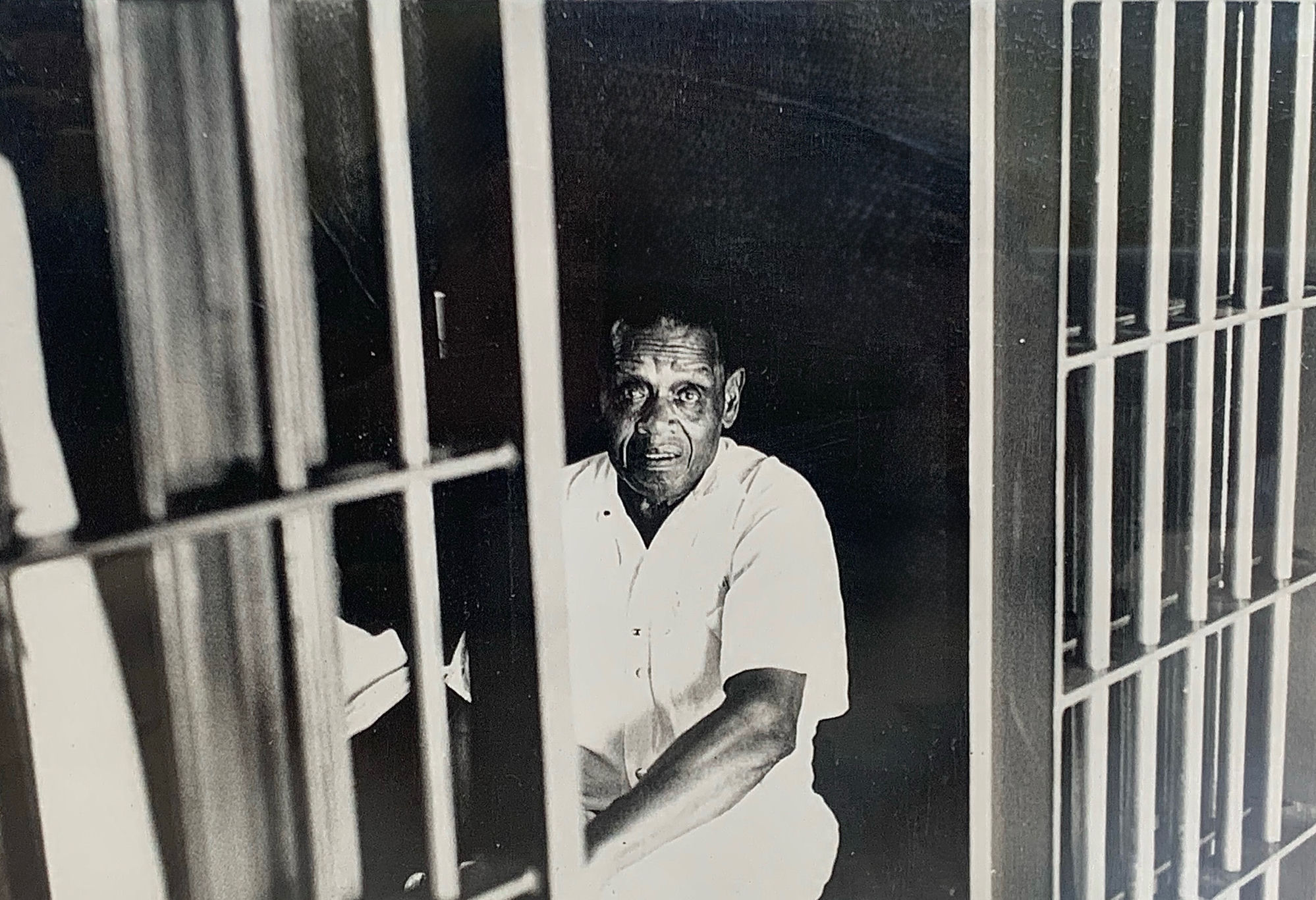
- Frank Jones, 1968. Photo: John Mahoney.
- Cellblock, ‘the Walls’, 1968. Huntsville Unit, Texas Department of Corrections. Photo: John Mahoney.
Archive photographs
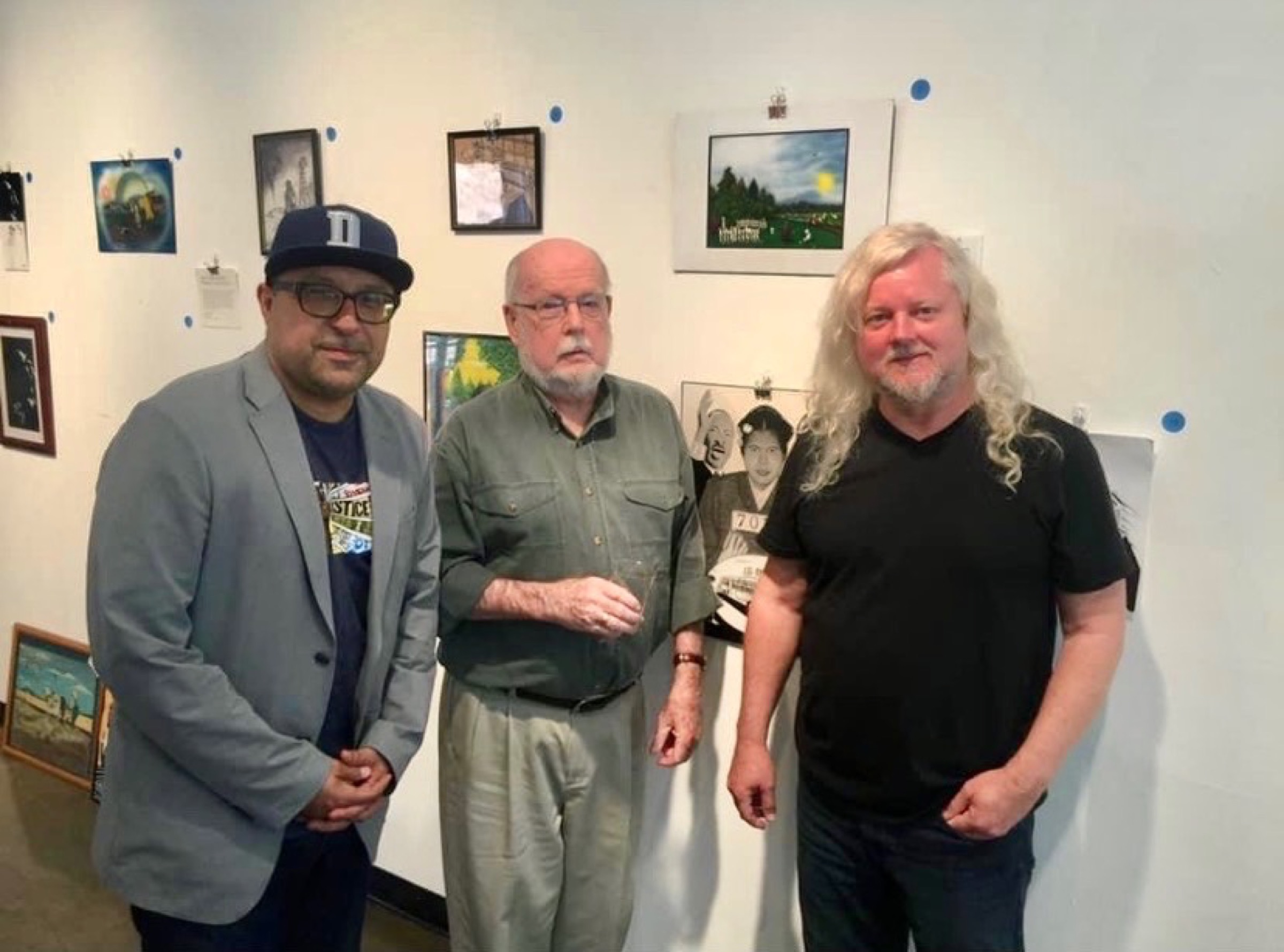
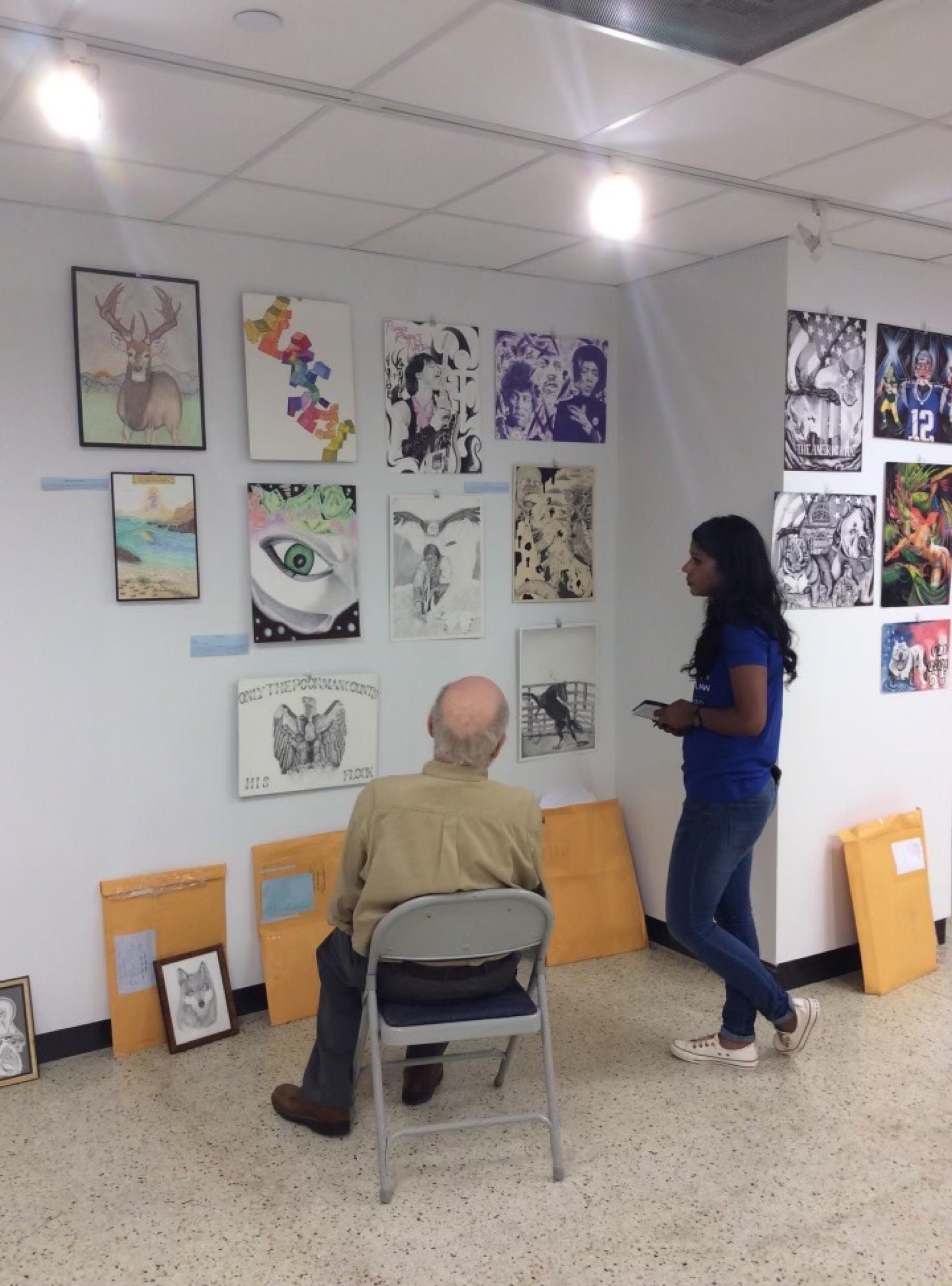
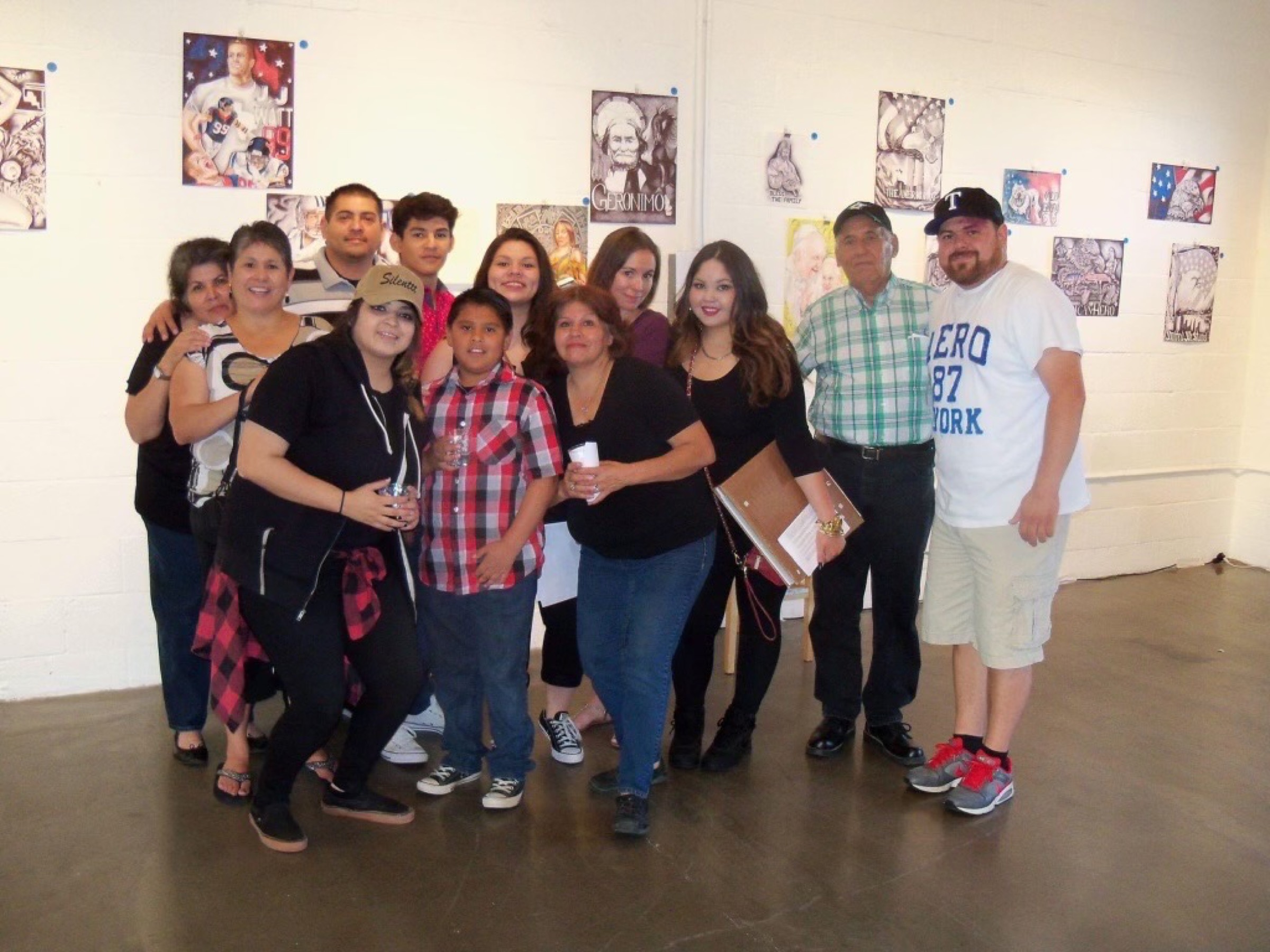
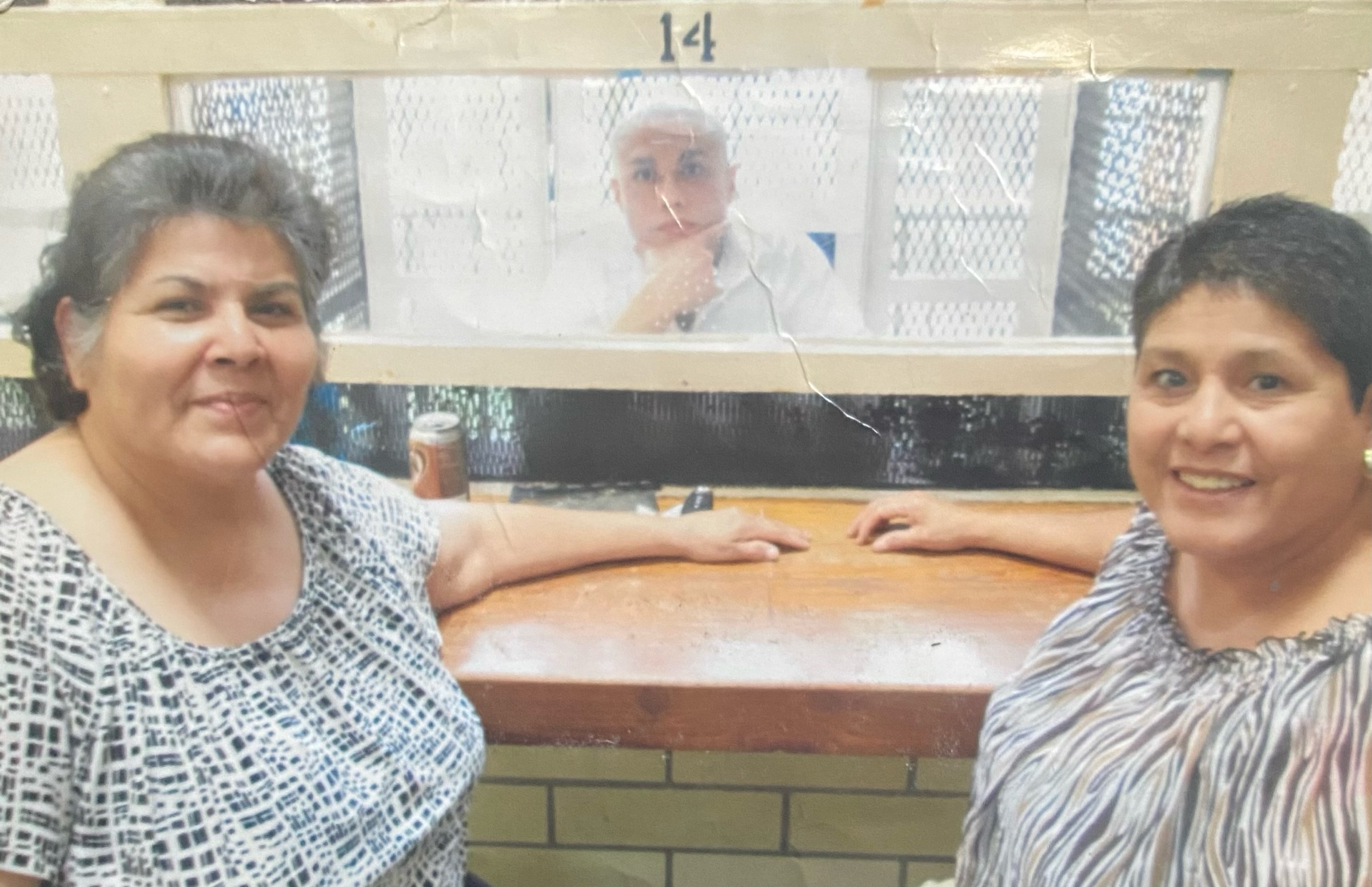
Selected images from the archive. Captions to be expanded.

About the author
Lynne Adele, an art historian specialising in the work of self-taught artists, wrote her master's thesis on Frank Jones in 1987. She worked in the art museum profession for a number of years and curated the exhibitions Black History/Black Vision: The Visionary Image in Texas, and Spirited Journeys: Self-Taught Texas Artists of the Twentieth Century.
Source
“A Hole in the World,” by Lynne Adele. Originally published in Raw Vision, issue 62 (RV/62, pp. 49–53). All works coloured pencil on paper. Photographs of the artist and the Walls Unit cellblock by John Mahoney, 1968.